
The story behind From Student to Teacher
Recently I caught up with Erin Scholes and Josh Chlebowski from From Student to Teachers to talk about their brilliant podcast to understand how it came to be, mentoring, and finally just one of the many topics they cover in their podcast - productivity and technology.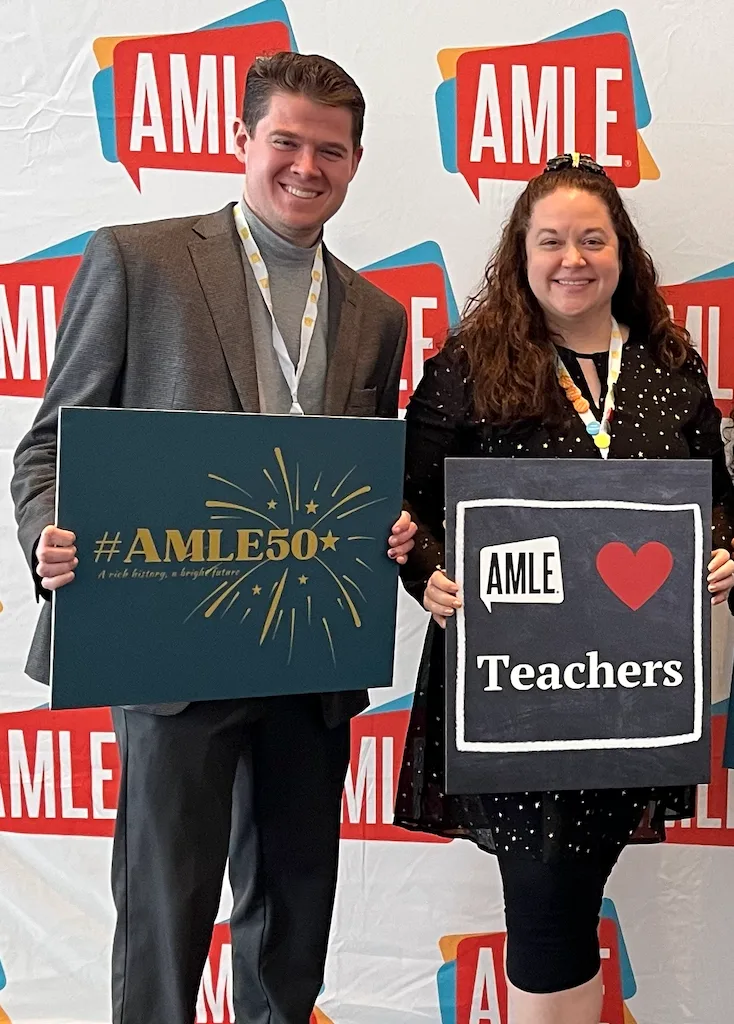
Podcast and Its Purpose
Rob Hellstrom, Clever Groups: Can you share the story behind the creation of the From Student to Teacher podcast and what inspired you both to embark on this journey together?
Josh Cheblowski: I was fortunate to have Erin as my 6th and 7th grade social studies teacher, and as I prepared to wrap up my senior year of college, my mom suggested that I reach out to Erin, and we met to discuss what the transition process would look like as I prepared to embark into the education profession. We met remotely, since we were in different states at the time, and walked through questions that really ranged in topic, which helped me to take a step out of my immediate coursework to see what I should be doing to help prepare for once I graduated.
Erin Scholes: I called Josh back a few days later and told him we should write a book together. His questions, my responses, his reflections on what it is like to be a beginning teacher.
Josh: Who knew that our one Zoom call would turn out to be the start of a phenomenal ongoing conversation? This project started as a book, but recently transitioned into a podcast, due to some logistical considerations, and it has allowed us to capture the dialogue we engage in when we’ve met throughout these past several years.
Rob: I can see you both have much to say, or indeed give back to the wider community. What do you want to achieve by making the From Student to Teacher podcast?
Erin: It is our goal to give pre-service and beginning teachers a space to turn for practical advice as they begin teaching. Certainly good advice for teaching is good advice for experienced teachers too, but our target audience are those at the start of their career.
Rob: Your From Student to Teacher podcast is fairly new. How do you see it evolving in, say, 6 months to 2 years?
Josh: As we’ve worked on episodes this past year, the focus has been on topics that are pressing or timely for early career educators. We want to remain with the framework of specifically supporting these colleagues as we continue into future seasons. Using some of the questions I had that first year of teaching, we work to ground ourselves in the range of experiences that arise in the education profession that may not be discussed in teacher preparation programs. For instance, we went through parent-teacher conferences a while ago, and it dawned on me that I’ve been doing them for the entirety of my career, but never really received any formal preparation on them. By centering these reflections, and building on questions from early career educators, we hope to continue addressing the essential skills and topics, while also exploring the nuances of an evolving career of education.
Mentorship and Teacher Growth
Rob: Josh, it’s clear you respect and appreciate Erin’s mentoring. How did that come about, and how has Erin’s mentoring impacted you?
Josh: My respect and appreciation for Erin’s mentoring really goes back to being a student in her classes. This mentoring process actually started back in high school—I completed an internship at our middle school, designing a lesson as part of that process. Erin gave me the first instructional strategy I think I encountered, “jigsawing”, and that point marked a transition from my being a social studies student to being a future teacher, shifting our connection to support my work in the education profession.
When I reconnected with Erin as a senior in college, we kept building from these earlier moments, and it has allowed me to really brainstorm different strategies and ideas to use in the classroom. Our discussions help me to explore what I value as an educator, and she certainly challenges some of the ideas I hold, which helps me to figure out how to navigate the educational climate and system in a way that keeps my priorities intact but not naive.
Rob: That’s such a valuable and special relationship you both have. Josh, I would imagine mentoring is not normal practice amongst teachers. How would you feel as a younger teacher without this mentoring?
Josh: I consider myself fortunate to work in a state where early career educators are required to complete a mentorship program. There was a benefit to a formal program requiring me to have these conversations with specific colleagues, but being able to dialogue with additional mentors was extremely helpful. I don’t know how I would have made it through the first years of teaching without numerous mentors—people I still turn to with different questions or ideas. Teaching, like anything, has so many perspectives to consider, and having mentors you trust and enjoy working with truly helps to expand your understanding of these viewpoints.
Rob: I am hearing a strong appreciation of having a mentor but surely this is not standard world wide and you must be in a minority. Erin, I understand you mentor other teachers, which is a noble (and I assume unpaid) role. What do you enjoy about mentoring, and how do you balance this with everything else you do?
Erin: For me, mentoring is twofold, it is a way to give back to the profession by helping beginning teachers find the teaching techniques that work best for them. Second, beginning teachers have a lot to offer the profession, they are excited, have great energy and creative ideas. Mentoring keeps me learning, both with and from the beginning teachers.
Rob: I can see the positive impact Josh and other mentees must be getting. But Erin, how has your mentoring of Josh impacted you?
Erin: Josh and I are truly friends. It has been wonderful getting to know a former student as an adult and colleague. I am so proud of all he has accomplished and I love the teacher he has become. It is so fun to now work together on our podcast, we have a great time sharing ideas, collaborating, and learning from each other. Josh’s questions keep me thinking as a teacher, since we don’t always do things the same, it helps me grow as an educator to hear his reasoning for the choices he makes in his lessons and teaching.
Rob: So it’s quite a two-way benefit but there must be some pointers or learnings you could advise. A teacher is reading this article and is either a mentor or mentee—or considering it. What would you want them to know or consider? How could they find the “other person” and start helping them?
Erin: I think it is important to remain positive, curious, and reflective (as both a mentee and mentor). Beginning teachers have so much to offer the profession, I think it is really important that as mentors we help foster their ideas, not stifle them. Who cares if we “tried that 10 years ago,” this teacher may bring something different to the table that brings an old idea back to life. They may also create something brand new that makes all our classrooms better in the process. I think it is also important to remember that failures help us learn. Don’t guard the teacher so much that they can’t make mistakes. Offer advice, share your experience, but remember it is about the new teacher’s journey to create their own classroom and teaching style that works for them.
Technology and Productivity in the Classroom
Rob: Let’s look at one big topic you cover in your podcasts. How do you envision the role of technology evolving in education, particularly concerning tools that facilitate teacher collaboration and professional development?
Erin: This is definitely my passion, my second masters was in educational technology. I think it is so important that students (and teachers) learn how to be good consumers of digital content, as well as being creators of their own content. It is my belief that if teachers know how to use technology tools, then they’re more likely to use that technology with their students. By sharing technologies with other educators, we are expanding the possibilities of tools they can use with their students.
Rob: You obviously have a lot of knowledge in this area. What advice would you give to new teachers about integrating technology into their teaching practices to boost productivity and student engagement?
Erin: Find the technology that works for you and your students. I think it is important to teach new technology to students in a context where you are reviewing material. If it is the first time using a type of technology, use it with content the students are familiar with so that the students are able to focus on the use of technology. Ask the students what they like or dislike, help answer their questions, but also encourage them to explore the technology features themselves. Finally, don’t use something once and give up, using technology can take multiple times to master and really become an effective teaching tool.
Rob: That’s good advice. How do you balance the use of technology with traditional teaching methods to maintain effective classroom management and student interaction?
Erin: Technology is constantly changing, and keeping up with the change can seem overwhelming at times, however, the purpose of technology is to make your life easier. I think it is important to use technology to enhance learning and assessment, not simply to say you use technology. One of the suggestions I have is as we see AI becoming more and more powerful, we want our students to continue to learn how to be critical thinkers and content creators. We are past the time of simply “writing a paper,” we can use technology to enhance the expression of learning. Students can make podcasts, or video recordings, they can create all sorts of products including gifs, brochures, websites, etc. Projects that require multiple modes of expression are great for critical thinking, and a bit harder to simply leave to an AI system to create. It is going to take a little more time to make sure students not only understand the content, but they also understand how to use the technology, but the end results are always fantastic.
Rob: Thanks so much for your time, Erin and Josh, and for your collective thoughts and wisdom.
Learn more about Erin and Josh in this Clever Groups blog and on their website or podcast episode!
Tune in to hear the “From Student to Teacher” podcast, hosted by Erin Scholes and Josh Chlebowski